A New Smile. Without Replacing Every Tooth!
When Margaret came to Fixed Teeth Australia, she had grown tired of the constant cycle of dental repairs and breakages. Living in Mildura, she had been exploring All-Fixed Full Mouth Dental Implants for both her upper and lower jaws, hoping to finally put her ongoing dental frustrations behind her.
After making enquiries with several clinics and struggling to find the answers she needed, Margaret was determined to find the right team to help her move forward.
What she discovered during her assessment with our team, however, was that replacing all her teeth wasn’t necessarily the best solution.
The Challenge:
Margaret had been visiting the dentist far too often for repairs and breakages, and she was ready for a more reliable, long-term solution.
While she initially expected to need full mouth dental implants on both jaws, our team identified something important – her remaining lower natural teeth could be saved.
Her upper jaw, however, presented a more complex challenge. Time and previous tooth loss had taken their toll on Margaret’s upper jawbone, leaving areas where there was insufficient bone to support conventional dental implants.
Her lower jaw had also experienced bone loss, particularly where several back teeth had been missing for more than 20 years.
Rather than simply replacing all her teeth, our team needed to develop a treatment plan that addressed the problems in her upper jaw while preserving the natural lower teeth that could be saved.
Treatment Plan:
For Margaret’s upper jaw, our team recommended an All-Fixed Full Mouth Dental Implant solution using a combination of conventional and zygomatic implants.
Zygomatic implants are longer implants that anchor into the cheekbone, providing support in cases where significant upper jawbone loss makes conventional implant placement difficult.
For her lower jaw, we took a more conservative approach. Rather than removing her remaining natural teeth, treatment involved bone grafting and the placement of a single dental implant to help prepare for future restorative work.
This meant Margaret could receive a completely new set of fixed upper teeth while retaining her natural lower teeth – avoiding more extensive treatment where it wasn’t necessary.
The Results:
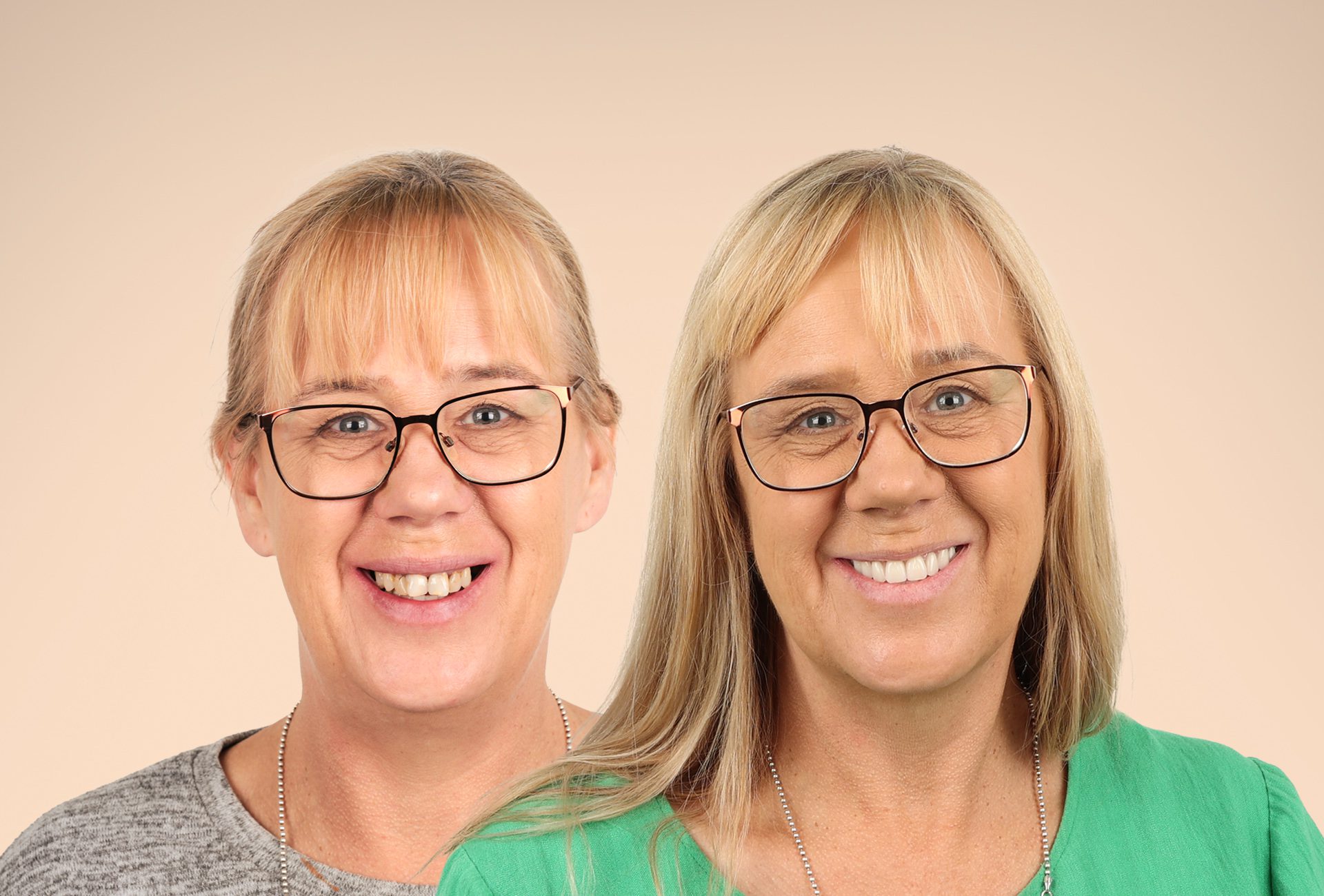
Margaret’s treatment provided her with a secure, functional upper fixed bridge, supported by a combination of conventional and zygomatic implants. Just as importantly, her remaining lower natural teeth were preserved, with targeted treatment undertaken to support her future restorative needs.*
And Margaret certainly wasn’t going to let distance stand in the way of getting the treatment she wanted.
Margaret’s commitment to her new smile was remarkable, travelling five hours each way from Mildura to our Ballarat clinic – often making a ten-hour round trip to receive the care she wanted.
After years of frustrating dental problems, her treatment represented a fresh start – and one that didn’t require sacrificing natural teeth that still had a future.
A Focus on Preserving What’s Possible:
Margaret’s story highlights an important part of our philosophy at Fixed Teeth Australia: full mouth dental implants aren’t always the answer for every jaw.
While replacing failing or missing teeth with fixed dental implants can offer significant benefits, we believe it’s equally important to recognise when natural teeth can be saved.
Where teeth have a reasonable long-term outlook, we’ll consider treatment options that preserve them rather than recommending unnecessary extractions.
Margaret’s case is also a reminder that missing teeth can lead to gradual jawbone loss over time, potentially making future implant treatment more complex. Seeking advice early can help identify available treatment options before further bone loss occurs.
For us, it’s not simply about replacing teeth. It’s about understanding each patient’s needs and recommending the treatment that makes the most sense for their long-term dental health.
Understanding Dental Implants and Jawbone Loss
Can you still have dental implants if you’ve experienced significant jawbone loss?
In many cases, yes. Depending on the amount and location of remaining jawbone, treatment options may include bone grafting, alternative implant positioning or, in selected upper jaw cases, zygomatic implants.
These techniques can make fixed dental implant treatment possible for some patients who may not be suitable for conventional implant placement alone.
Do all remaining teeth need to be removed for full mouth dental implants?
Not necessarily. As Margaret’s case demonstrates, it may be possible to preserve natural teeth in one jaw while replacing missing or failing teeth in the other.
Where natural teeth are healthy enough to retain, more conservative restorative treatment may be appropriate. The best approach depends on a detailed assessment of the teeth, gums and supporting jawbone.
Why is it important to seek advice about missing teeth early?
When teeth are lost, the surrounding jawbone can gradually shrink because it no longer receives the same stimulation from natural tooth roots.
Over time, this can reduce the amount of bone available to support dental implants and may require more complex treatment techniques.
An early assessment can help patients understand their options and plan for their future dental health.
___________________________________
Considering Full Mouth Dental Implants?
Find out more about our All-Fixed Full Mouth Dental Implant treatment, including options for patients with significant jawbone loss and how we assess whether natural teeth can be preserved.
Individual treatment requirements, risks and results vary. Suitability is determined following clinical assessment.
Many thanks to Margaret for allowing us to share her story!
Final result shown 6 months after treatment completion | Dr Brian Johnston DEN0001007940